Beat DMV Lines: Best Times to Visit & Tips
Discover the best times to go to the DMV and strategies to avoid long lines. Our guide reveals optimal days and hours to help you navigate DMV wait times efficiently and get in and out faster.
Dr. Elena Vance - Head of Research & State Regulations
1/12/202614 min read
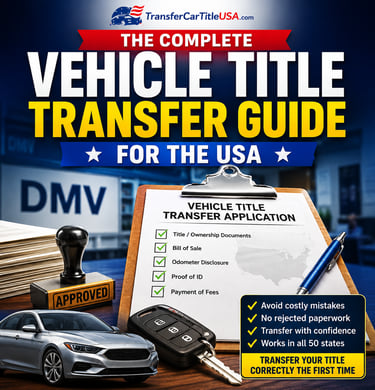
Nobody enjoys losing half a day at the DMV. The good news is that many waits are preventable. You may not control staffing, holidays, computer systems, or the number of people ahead of you, but you can control when you go, which office you choose, whether you need to go in person at all, and how complete your paperwork is before you walk inside. The fastest DMV visit is often the visit you never make because the transaction can be done online, by mail, through a kiosk, or through an approved partner.
This guide explains the best times to visit the DMV, how to avoid predictable wait-time traps, and how to prepare for vehicle title, registration, and license-related appointments. It is written for U.S. drivers and vehicle owners, but DMV systems vary by state and even by county. Always confirm your local office hours, appointment rules, accepted services, closures, and document requirements through the official state DMV or motor vehicle agency before leaving home.
The basic strategy is simple: choose the right channel before choosing the right time.
Use online service if the transaction is eligible.
Use a kiosk or partner location when your state allows it.
Use an appointment when the office supports reservations.
Choose a lower-demand office if travel time is worth it.
Avoid deadline days, lunch rushes, and holiday spillover.
Bring a complete document packet.
Ask the right office before standing in the wrong line.
First question: do you need to visit at all?
Before asking which day is best, ask whether an office visit is necessary. Many DMV tasks have moved online or to alternative service channels. California, for example, says some services must be completed online, at a kiosk, through a business partner, or by mail, and its appointment page tells users to know before they go on the California DMV appointments page. That single step can save more time than any line strategy.
Transactions that may have online or alternative options include:
Vehicle registration renewal.
Address changes.
Replacement registration cards.
Replacement stickers or plates.
Driver record requests.
Release of liability or notice of sale.
Some title transfer starts or document uploads.
Appointment scheduling.
Fee estimates and form downloads.
Do not assume your task requires a counter. Check first. If the website says the service is online only, going to an office may waste the entire trip.
Best days to visit the DMV
There is no universal magic day, but there are patterns. DMV offices tend to be busier when many people are free, when deadlines pile up, and when closures push customers into the next open day. Midweek is often more manageable than Monday or Friday, but local patterns matter.
Usually better days include:
Tuesday.
Wednesday.
Thursday morning.
Non-holiday weeks.
Days after major weather disruptions have cleared.
Days that are not near the end of the month.
Usually riskier days include:
Monday, because weekend problems accumulate.
Friday, because people try to finish before the weekend.
The first business day after a holiday.
The day before a holiday closure.
End-of-month and deadline-heavy days.
School-break periods in offices serving many teen drivers.
A small rural office on Friday may be faster than a city office on Wednesday. Use local wait tools if your state provides them.
Best times of day to visit
The best time of day depends on whether the office uses appointments, walk-ins, or both. In general, early appointments reduce the risk of accumulated delays. Late morning can work if the first rush is over. Lunch hours can be difficult because staffing and customer volume may shift. Late afternoon can be risky if your transaction is complex and the office closes before it is completed.
Better time windows often include:
First appointment of the morning.
Shortly after opening, if walk-ins are accepted.
Midmorning after the opening rush.
Early afternoon only if appointments are controlled.
Any time slot with confirmed reservation and full documents.
Riskier time windows often include:
Right at opening without an appointment in a high-demand office.
Lunch period.
Final hour before closing.
After school hours for permit, license, or teen-driver services.
Late day for title transfers, lien issues, or complicated paperwork.
If you have a title problem, estate transfer, out-of-state transfer, or rejected application, avoid the final hour. You need time for questions.
Appointments are not all equal
An appointment is powerful, but only if it is for the correct service. Booking the wrong category may put you in the wrong queue or leave you unable to complete the transaction. California’s location page lets users filter location types and services, including title transfers, registration, temporary operating permits, vehicle verification, and replacement title services on the California DMV locations page. That is the kind of filtering you should use before choosing an office.
Before booking, confirm:
The office handles your exact service.
The appointment category matches the transaction.
You know whether walk-ins are accepted.
You know whether the service is online only.
You have every required form and document.
You understand payment methods.
You know parking, arrival, and check-in instructions.
You have enough time before the office closes.
A reservation does not fix missing paperwork. It only protects your place in the process.
Choose the right office, not only the nearest office
The nearest DMV is not always the fastest DMV. A slightly farther office may have better appointment availability, fewer walk-ins, easier parking, or the specific service you need. Some states use county offices, tag offices, motor vehicle agencies, kiosks, business partners, or separate driver license locations. Going to the wrong place is the slowest possible strategy.
Compare offices by:
Services offered.
Appointment availability.
Distance and traffic.
Parking difficulty.
Walk-in policy.
Same-day capacity.
Title transfer or registration specialization.
Accessibility and language services.
Local closure notices.
New York’s DMV office page tells users to search by city or ZIP code, review in-person services, and make appointments where available, and it also warns that some offices may restrict entry when wait times are long on the New York DMV office locations page. That is a strong reminder to verify the office before showing up.
Avoid holiday and closure traps
DMV wait times spike when office closures compress demand. A holiday Monday can make Tuesday feel like Monday. Bad weather, system outages, staff training, road-test cancellations, and local office closures can also shift traffic to nearby branches.
Avoid these timing traps:
First open day after a holiday.
Day before a long weekend.
First open day after severe weather.
Local closure spillover at nearby offices.
Deadline dates after a statewide extension ends.
Lunch period after a morning system outage.
Final week before school starts.
Check closure notices before leaving. ## Prepare documents before choosing a time
A perfect appointment is useless if your documents are incomplete. For car title, registration, or ownership transactions, clerks review the file, not your intention. If one signature, lien release, odometer disclosure, or fee is missing, you may need another appointment.
Build a DMV packet with:
Current title or ownership document.
Completed application form.
Bill of sale if required or helpful.
Odometer disclosure if required.
Lien release or lender confirmation.
Proof of insurance if registration requires it.
Inspection, emissions, or VIN verification paperwork.
Identification for the buyer or applicant.
Tax and fee payment in an accepted method.
Appointment confirmation and case number.
For title work, California’s title page lists signatures, title documents, fees, and other forms that may apply, including replacement title, statement of facts, lien release, and bill of sale documents. Use official lists before relying on memory.
Best strategy for title transfers
Title transfers deserve extra preparation because a missing signature can require another person. If the seller leaves town, becomes unreachable, or refuses to correct a mistake, the wait time becomes the smallest problem. The fastest title transfer is one where the seller, buyer, title, lien release, and payment are coordinated before the office visit.
For title transfers, do this:
Meet during business hours if possible.
Confirm the office handles title transfers.
Verify VIN on title and vehicle.
Check seller ID against title name.
Complete odometer disclosure before signing.
Bring lien release if any lien is listed.
Bring all owners if signatures are required.
Keep the seller reachable until the transaction is accepted.
Make copies or photos before handing documents over.
If the vehicle is out of state, inherited, gifted, branded, financed, or missing a title, expect extra steps.
Best strategy for registration and plates
Registration and plate transactions can be faster than title problems, but only when you choose the correct channel. Some renewals may be online, by kiosk, by mail, or through partner locations. New registrations, plate changes, temporary permits, and proof-of-insurance issues may require different service categories.
Before visiting for registration or plates, confirm:
Whether the service is available online.
Whether a kiosk can complete it.
Whether the office accepts that transaction type.
Whether inspection or emissions proof is required.
Whether insurance proof must be submitted.
Whether plates stay with the owner or vehicle.
Whether temporary operating permits are available.
Whether fees can be paid by your preferred method.
Best strategy for license and ID visits
Driver license and ID visits have their own rhythm. Permit testing, road tests, REAL ID upgrades, renewals, and replacement cards may use different appointment categories. Teen-driver services can affect afternoon volume, while REAL ID appointments can require more documents than a basic renewal.
For license or ID visits:
Start the application online if your state offers it.
Use the official document guide when available.
Bring original documents, not only photos.
Confirm name-change documents if your name changed.
Avoid after-school rush when possible.
Do not book a license appointment for a vehicle title issue.
Check whether renewal is online only.
Arrive early enough to check in without losing the slot.
Use wait time tools and location filters
Some DMV websites show estimated wait times, appointment availability, service filters, or office search tools. Even when they do not show exact waits, they can reveal which locations handle the service and which are closed. This is especially useful in large metro areas where two offices thirty minutes apart may have very different demand.
Use official tools to check:
Office services.
Appointment availability.
Walk-in rules.
Closures and alerts.
Kiosk or partner options.
Document requirements.
Online transaction eligibility.
Payment methods.
Do this before leaving, not while standing in the parking lot.
When walk-ins make sense
Walk-ins can work when the transaction is simple, the office is known to accept them, and you can arrive early with complete documents. Walk-ins are risky when offices prioritize appointments, limit capacity, or restrict entry during long wait times.
Walk-ins are more reasonable when:
The transaction is simple.
The office confirms walk-ins are accepted.
You arrive early.
You have flexible time.
You have every document ready.
You are not near a deadline.
A backup office is available.
Walk-ins are less reasonable when:
The transaction is complex.
You need multiple services.
You have a title correction.
You need a road test or permit test.
The office warns that reservations get priority.
You cannot afford to wait or return.
If your time has value, an appointment is usually worth the planning.
What to do the night before
The night before your DMV visit is where you prevent most avoidable delays. Do not wait until the morning to print forms, find insurance, search for the title, or discover that your appointment is at a different office.
Night-before checklist:
Confirm office address and service category.
Check appointment time and check-in rules.
Review closure alerts.
Print or save required forms.
Put original documents in one folder.
Make copies when allowed.
Confirm payment method.
Charge your phone.
Save confirmation numbers.
Plan parking and travel time.
Treat the visit like a flight. Arriving late, at the wrong terminal, with missing documents creates predictable trouble.
What to do if the office is packed
Sometimes the line is bad even when you planned well. Do not panic. Decide whether the wait is worth it, whether another channel can complete the transaction, or whether rescheduling is smarter.
If the office is packed:
Ask whether appointments are still being honored.
Ask whether your transaction can be done online or by kiosk.
Ask whether another nearby office handles the same service.
Check whether the office posts current wait estimates.
Decide whether your deadline requires staying.
Use the wait to recheck every document.
Avoid leaving if you already checked in unless you know the consequence.
A bad line is annoying. A bad line plus missing paperwork is brutal.
How to avoid second trips
Second trips usually happen for boring reasons. The wrong form. One missing signature. A fee that cannot be paid with the method you brought. A title issue that required the seller. A document that had to be original. These are preventable.
Avoid second trips by confirming:
Correct office.
Correct transaction category.
Current forms.
Original documents where required.
All signatures.
All co-owners.
Lien release.
Odometer disclosure.
Accepted payment method.
Appointment and case numbers.
When in doubt, bring more supporting documents than you expect to need, but keep them organized.
The “wrong service” problem
Many DMV delays start before the customer enters the building. People book or join a line for the wrong service. A title transfer may not be handled at the same counter as a driver license test. A replacement sticker may be available at a kiosk while a salvage title may require a specific office. A county tax office may handle vehicle registration in one state, while a state agency handles it elsewhere.
Avoid the wrong-service trap by checking:
The exact transaction name on the DMV website.
Whether the service is vehicle, driver license, ID, records, or testing.
Whether title transfer is handled by state, county, or partner office.
Whether the office accepts walk-ins for that service.
Whether the service requires an appointment.
Whether documents can be uploaded before arrival.
Whether the office has a separate line for appointments.
Whether a kiosk or online option is faster.
The best time to visit the DMV is useless if you are in the wrong queue.
Why paperwork beats timing
People obsess over the perfect hour, but paperwork quality matters more. A customer with a complete packet at 11:00 may finish faster than a customer with missing forms at 8:00. Clerks can process complete transactions. They cannot process missing evidence.
Paperwork beats timing because:
Complete documents reduce questions.
Correct forms prevent re-entry into the queue.
Original documents prevent proof problems.
Accurate names prevent identity mismatch.
Correct fees prevent payment delays.
Seller signatures prevent title rejection.
Lien releases prevent ownership blocks.
Appointment confirmation prevents check-in problems.
If you only do one thing, complete the document checklist before choosing your outfit, route, or coffee stop.
Best DMV visit plan for car title transfers
Car title transfers are high-risk DMV visits because they often involve another person. If a buyer discovers a missing seller signature after waiting two hours, the clerk cannot summon the seller. That means another call, another meeting, another trip, and maybe another appointment.
For title transfers, plan like this:
Review your state title transfer page before sale day.
Meet the seller during business hours.
Compare the VIN on the title and vehicle.
Complete buyer and seller sections before leaving.
Complete odometer disclosure carefully.
Bring lien release documents if a lien appears.
Bring gift, estate, out-of-state, or business forms if relevant.
File within your state deadline.
Keep copies of everything.
California’s title transfer guidance says ownership or lienholder changes must be reported within 10 days, and sellers must submit a Notice of Transfer and Release of Liability within 5 days when applicable. That kind of deadline makes delay planning important.
Best DMV visit plan for out-of-state vehicles
Out-of-state vehicles can require extra time because the receiving state may need VIN verification, tax review, inspection, emissions documents, lienholder confirmation, or an original out-of-state title. Do not schedule an out-of-state transfer for the final hour of the day.
For out-of-state transfers:
Check both state rules before buying.
Confirm whether VIN verification is required.
Confirm whether emissions or safety inspection is required.
Bring the original out-of-state title.
Bring lienholder documents if the title is electronic or financed.
Bring proof of tax paid if your state gives credit.
Bring insurance and identification.
Choose an appointment with enough time for review.
A routine renewal can be squeezed into a short window. An out-of-state title should not be.
Best DMV visit plan for replacement documents
Replacement documents may be simpler than full transfers, but many states push these transactions online, by mail, or through kiosks. If the service is available outside the office, the best line strategy is to avoid the line completely.
Replacement-document examples include:
Replacement registration card.
Replacement sticker.
Replacement plates.
Replacement driver license.
Duplicate or replacement title.
Address update.
Driver or vehicle record request.
Before visiting, confirm whether the replacement can be ordered online. California’s appointment page specifically notes that certain renewal and replacement services are not provided as counter service unless specified. That is exactly the type of detail to check before driving to an office.
The 30-minute pre-visit routine
Thirty minutes before leaving, do one final check. This is the small routine that prevents dumb delays. It feels excessive until it saves you a second trip.
Pre-visit routine:
Reopen the official office page.
Check today’s hours and closure notices.
Confirm appointment time.
Confirm office address.
Confirm service category.
Confirm documents.
Confirm payment method.
Put originals in one folder.
Put copies behind originals.
Save digital confirmations on your phone.
Do this before you leave, not from the parking lot.
How to make appointments work harder
An appointment is more than a time slot. It is a planning tool. Use it to force yourself to identify the transaction, gather documents, and avoid the wrong office. If the first available appointment is weeks away, compare other nearby offices and alternative service channels.
Make appointments work harder by:
Booking the exact service type.
Choosing early time slots for complicated matters.
Avoiding late Friday for complex paperwork.
Comparing nearby offices before accepting a bad time.
Checking whether online completion is possible instead.
Arriving early enough to check in.
Bringing confirmation numbers.
Canceling only if you know how rescheduling affects deadlines.
How to behave at the counter
Counter behavior can affect clarity. You do not need to charm anyone. You need to make the transaction easy to understand. Start with the exact service, hand over organized documents, and answer questions directly.
At the counter:
State the transaction clearly.
Mention any special issue immediately.
Hand documents in logical order.
Do not mix unrelated paperwork into the packet.
Ask for the exact missing item if rejected.
Ask whether correction can be mailed, uploaded, or must be in person.
Keep receipts and case numbers.
Stay calm if the answer is not what you hoped.
A clerk who understands the file quickly can help you faster.
DMV line myths to ignore
There is a lot of folk advice about DMV lines. Some of it is useful, some is just repetition. The most dangerous myth is that one secret hour solves every office. DMV systems differ too much for that.
Ignore myths like:
“Always go at opening.” Sometimes everyone does that.
“Never make appointments.” Some offices prioritize reservations.
“Small offices are always faster.” Some small offices offer fewer services.
“Lunch is always empty.” Staffing may be lower at lunch.
“Friday afternoon is fine.” Complex files can run out of review time.
“A bill of sale fixes everything.” Title transfers still need required ownership documents.
“The clerk can correct any mistake.” Some corrections require the seller, lender, or court.
Good planning beats magic-hour advice.
Build a backup plan
Even a well-planned visit can fail because of a closure, system outage, missing document, payment issue, or appointment mistake. A backup plan keeps one bad morning from ruining the whole week.
Before leaving, know:
The next closest office that handles the same service.
Whether a kiosk can complete part of the transaction.
Whether the service can be finished online after document review.
Whether your deadline allows rescheduling.
Whether the seller, lienholder, or co-owner can be reached today.
Whether you have enough time to correct a problem before closing.
For title transfers, keep the seller reachable until the office accepts the packet. That one habit can save another meeting.
Deadline strategy
Do not visit the DMV on the last possible day unless you have no choice. Deadlines create stress, and stress creates mistakes. Registration expiration, title transfer deadlines, temporary permits, insurance requirements, and late fees can all make a routine visit feel urgent.
Handle deadline transactions by:
Starting several days early.
Booking the first correct appointment available.
Checking online or kiosk options first.
Bringing payment for possible penalties.
Asking whether proof of attempted filing matters.
Saving confirmation numbers.
Avoiding late-afternoon visits.
If a deadline is already close, call or check the official site before choosing a line strategy.
Use multiple channels together
The fastest approach may combine channels. You might download forms online, schedule an appointment, complete an application before arrival, use a kiosk for a separate renewal, and visit the office only for the transaction that truly needs a clerk.
A combined strategy can include:
Online form preparation.
Appointment booking.
Office service filtering.
Kiosk use for simple renewals.
Mail for low-risk follow-up documents.
In-person review for title problems.
Phone or email status checks when available.
The goal is not to avoid every DMV interaction. The goal is to use each channel for the job it handles best.
FAQ
What is the best day to go to the DMV?
Midweek days such as Tuesday, Wednesday, or Thursday are often better than Monday or Friday, but local demand varies. Always check your specific office, appointment availability, and closure alerts.
What is the best time to visit the DMV?
Early appointments are usually safest because delays have not accumulated. Midmorning can also work. Lunch hours and the final hour before closing are riskier, especially for complicated transactions.
Is it faster to make an appointment?
Usually yes, if the appointment is for the correct service. A wrong appointment category or missing paperwork can still cause delay or rejection.
Can I avoid the DMV office completely?
Sometimes. Many states offer online services, kiosks, business partners, mail options, and appointment tools. Check your official DMV website before going in person.
Are smaller DMV offices faster?
Sometimes, but not always. A smaller office may have fewer customers, but it may also offer fewer services. Verify the exact service before driving farther.
Should I go right when the DMV opens?
Opening can work with an appointment, but walk-in lines may already be long. First appointment is usually better than simply arriving at the door with everyone else.
What should I bring for a title transfer visit?
Bring the title, application, bill of sale, ID, insurance, odometer disclosure, lien release, inspection or VIN documents, payment, and any special transfer forms your state requires.
What if wait times are long when I arrive?
Ask whether your appointment is still honored, whether your transaction can be completed online or at a kiosk, and whether another nearby office handles the same service. If you stay, use the wait to recheck your documents.
Final DMV visit timing table
Use this table to choose the best visit strategy before you leave home.
👉 Go at the right time, with the right preparation, and the DMV becomes manageable.https://transfercartitleusa.com/the-complete-guide
Help
Quick tips to avoid DMV delays
Contact
infoebookusa@aol.com
© 2026. All rights reserved.