Selling an Inherited Car Without Delays (The Correct Order That Prevents Rejection)
Selling an inherited car requires the correct legal and DMV sequence to avoid delays and rejected paperwork. Learn the proper order for probate, title transfers, lien releases, and sale documents to complete the process smoothly.
Dr. Marcus Thorne - Operations & Compliance Manager
2/2/20263 min read
Selling an Inherited Car Without Delays (The Correct Order That Prevents Rejection)
Selling a car you inherited can be straightforward—or it can turn into months of delays if steps are taken in the wrong order. The biggest mistakes happen when families sell first and sort out the title later. At the DMV, that order never works.
This guide explains exactly how to sell an inherited car, when you must retitle it first, when you can sell directly from the estate, and how to avoid rejections that freeze the sale.
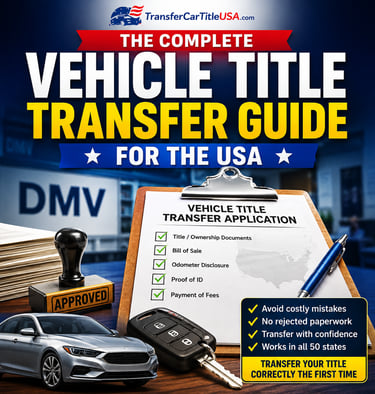
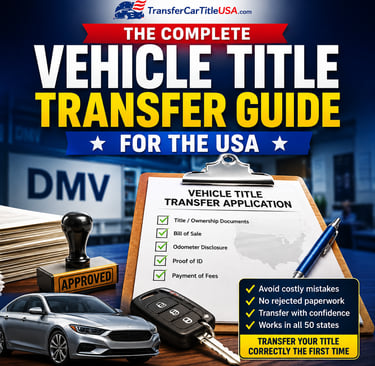
👉 If you want to transfer your car title the right way, the first time, the full eBook gives you everything you need—without confusion, delays, or costly mistakes.
https://transfercartitleusa.com/the-complete-guide
The Golden Rule (Read This First)
You cannot sell what you do not legally control.
Before a sale can happen, legal authority must be established—not assumed.
Step 1 — Identify Your Authority Path
Everything depends on how you are authorized to act.
There are only three valid authority paths:
Probate (Executor or Administrator)
Small Estate Affidavit (If Eligible)
Surviving Owner / TOD Beneficiary
No authority = no sale.
Step 2 — Decide Whether You Must Retitle Before Selling
This is the most misunderstood step.
You MUST retitle first if:
You are an heir using a small estate affidavit (in most states)
The buyer’s state requires a title in the seller’s name
The DMV does not allow direct estate-to-buyer transfers
You MAY sell directly from the estate if:
You are a court-appointed executor/administrator
State law allows executor sales
The executor signs as executor
Always verify this with your state DMV.
Step 3 — Check the Title for Liens (Critical)
Inheritance does not cancel liens.
If a lien exists:
It must be released
Lender controls the title
Sale cannot proceed without clearance
Trying to sell with an active lien often kills deals.
Step 4 — Gather Required Documents Before Listing the Car
Before advertising the car, make sure you have:
Original title
Death certificate (certified copy)
Probate documents or small estate affidavit
Lien release (if applicable)
State-specific forms
Listing the car without these is risky.
Step 5 — How to Sign the Title Correctly (Very Important)
The way you sign depends on authority:
Executor / Administrator
Signs:
[Your Name], Executor of the Estate of [Deceased]
Small Estate Affidavit Heir
Signs as:
[Your Name], heir under small estate affidavit
Surviving Owner / TOD Beneficiary
Signs as standard owner (after title update if required)
Signing the deceased’s name is never allowed.
Step 6 — Complete the Sale the Right Way
At sale:
Complete buyer information clearly
Match names exactly
Enter correct sale price
Date correctly
Attach authority documents
Do not leave any fields blank.
Step 7 — Submit the Transfer Promptly
Depending on your state:
Executor may submit directly
Buyer may submit with authority docs
In-person submission is strongly recommended
Mail submissions with inheritance are slow.
Step 8 — What Buyers Often Fear (And How to Reassure Them)
Buyers worry about:
Authority validity
Probate issues
Delays
Rejections
Reassure them by:
Showing probate or affidavit documents
Explaining the process clearly
Being transparent about timelines
Prepared sellers close deals faster.
Common Mistakes That Kill Inherited Car Sales
Avoid these at all costs:
Selling before authority is established
Using the wrong signing format
Ignoring lien clearance
Assuming family status equals authority
Letting buyers “figure it out”
Each one leads to rejection.
Realistic Timelines (What to Expect)
Typical scenarios:
Executor sale: 1–2 weeks after documents ready
Small estate retitle + sale: 2–4 weeks
Lien involved: add 2–4+ weeks
Rushing only adds delays.
Why the DMV Is Strict With Inherited Sales
From the DMV’s perspective:
Ownership disputes are common
Estates are high-risk
Fraud potential is higher
They require clarity because mistakes can’t be undone easily.
The One Rule That Prevents Rejection
Establish authority first. Sell second. Transfer last.
Reversing this order always fails.
Final Takeaway
Selling an inherited car doesn’t have to be complicated—but it must be done in the correct sequence. When authority, liens, and documentation are handled first, the sale becomes routine.
If you want:
state-specific executor sale rules
small estate vs probate sale comparisons
buyer-ready document checklists
DMV-proof signing examples
…the complete eBook walks you through inherited car sales step by step—without delays or rejected transfers.
👉 Sell with authority, not assumptions.https://transfercartitleusa.com/the-complete-guide
Help
Quick tips to avoid DMV delays
Contact
infoebookusa@aol.com
© 2026. All rights reserved.