What Happens After Your Title Transfer Is Approved (Timelines, Mailing, and What to Check Immediately)
What happens after your DMV title transfer is approved? Learn expected timelines, mailing delays, temporary documents, registration updates, and the critical details you should verify immediately to avoid future ownership problems.
Dr. David Choi Customer Experience & Content Strategist
4/15/20263 min read
What Happens After Your Title Transfer Is Approved (Timelines, Mailing, and What to Check Immediately)
Most people relax once the DMV says their title transfer is approved. That’s understandable—but it’s also where costly mistakes still happen. Approval is not the end of the process. There is a short but critical window where errors can be caught easily—or become permanent problems later.
This guide explains exactly what happens after a title transfer is approved, how long each step takes, what the DMV does next, and what you must check immediately to avoid future issues.
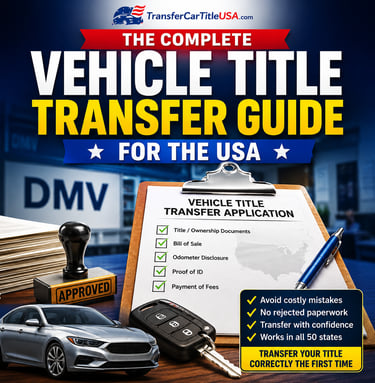
👉 If you want to transfer your car title the right way, the first time, the full eBook gives you everything you need—without confusion, delays, or costly mistakes.
https://transfercartitleusa.com/the-complete-guide
Approval Does NOT Mean the Title Is Issued Yet
When the DMV says “approved,” it usually means:
Your paperwork passed review
The transfer is authorized
The case moved to issuance
It does not mean:
The title has been printed
The title has been mailed
The title is error-free
Issuance is a separate step.
The Post-Approval Process (What the DMV Does Next)
After approval, the DMV typically:
Finalizes ownership records
Updates lien status (if applicable)
Creates the new title record
Prints or generates the title
Sends the title for mailing or electronic release
Each step can introduce delays—or errors.
How Long It Takes After Approval
Typical timelines (varies by state):
Electronic title states: 1–5 business days
Paper title printing: 3–10 business days
Mailing time: 5–14 business days
Peak periods: add 1–2 weeks
Approval without a title in hand for 2–3 weeks is often normal.
Paper Title vs Electronic Title (Important Difference)
Paper Title States
Title is printed and mailed
Delivery depends on postal service
Errors must be corrected after receipt
Electronic Title States
Title is held digitally
You may not receive anything by mail
A paper title is issued only when requested or when selling
Know which system your state uses.
Where the Title Is Mailed (Common Surprise)
Titles are mailed to:
The address on file
Not always the address on the application
Not always your current address
If your address recently changed, titles are often misdelivered.
What to Do If the Title Doesn’t Arrive
If the expected timeline passes:
Check online title status
Confirm mailing address on record
Verify title wasn’t issued electronically
Contact DMV title department—not general support
Do not request a replacement immediately unless confirmed lost.
What You MUST Check the Moment the Title Arrives
Open the envelope and verify every detail:
Owner name spelling
Owner order
AND / OR wording
VIN (character by character)
Lien status (present or removed correctly)
Vehicle year, make, model
State branding (salvage, rebuilt, bonded, etc.)
Even small errors matter.
The 30-Day Correction Window (Often Missed)
Many states allow:
Free or low-cost corrections
Faster processing
Simplified affidavits
…but only if errors are reported quickly.
Waiting months can:
Trigger replacement title fees
Complicate future transfers
Raise questions about ownership history
Act immediately.
Why Errors Appear After Approval
Common causes:
Data entry mistakes
System sync issues
Lien release delays
Old records overriding new ones
Approval doesn’t guarantee perfection.
Can You Drive or Sell Before Receiving the Title?
Driving
Usually allowed if registration is valid
Title is not required for daily driving
Selling or Refinancing
Usually not allowed without the title (paper or electronic release)
Buyers and lenders require title proof
Approval alone isn’t enough.
What Happens If a Lien Still Appears After Approval
This is more common than people expect.
If a lien:
Was paid off recently
Was released late
Was electronic
It may still appear on the issued title.
This must be corrected immediately.
Store Your Title the Right Way
Once correct:
Store in a secure place
Do not keep in the car
Do not fold excessively
Do not write on it
A damaged title causes future problems.
When to Request a Paper Title in Electronic States
Request a paper title if:
You plan to sell soon
You plan to move out of state
You want physical proof of ownership
Waiting until a sale can cause delays.
The One Question to Ask Yourself After Approval
Ask:
If I had to sell or transfer this vehicle tomorrow, is everything on this title 100% correct?
If not, fix it now—while it’s easy.
The One Rule That Prevents Future Headaches
Approval is permission. The title is proof. Always verify the proof.
Never assume correctness.
Final Takeaway
Approval is an important milestone—but it’s not the finish line. The final responsibility rests with you to verify the issued title, catch errors early, and secure clean proof of ownership.
If you want:
post-approval checklists
error-spotting guides
electronic vs paper title workflows
correction request templates
…the complete eBook walks you through the final stage of title transfers step by step.
👉 Don’t celebrate approval—verify it.https://transfercartitleusa.com/the-complete-guide
Help
Quick tips to avoid DMV delays
Contact
infoebookusa@aol.com
© 2026. All rights reserved.