Avoid DMV Title Application Rejections
Discover why the DMV rejects over half of title applications due to minor mistakes. Our guide on car title transfers helps you prevent common DMV mistakes and navigate the process smoothly. Don't let bureaucratic hurdles ruin your deal—learn how to succeed!
Dr. James R. Sterling - Founder & Lead Documentation Specialist
1/3/202615 min read
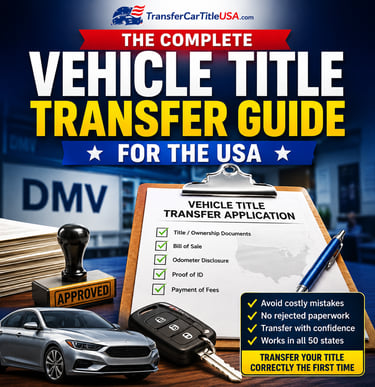
A rejected car title application usually reflects a specific conflict: a missing signature, an altered assignment, an unresolved lien, inconsistent ownership evidence, or a form that does not match the transaction. The practical solution is to compare every document before submitting the package.
To prevent a DMV title application rejection, verify the owner and VIN, use the current state forms, complete every required signature and disclosure, resolve liens, preserve original documents, and make all names, dates, prices, and mileage entries consistent. If an error already exists, ask the motor vehicle agency for the official correction process instead of erasing or overwriting it.
This guide covers common private vehicle transfers and title applications in the United States. Dealer transactions, estates, court orders, imported vehicles, rebuilt vehicles, abandoned vehicles, and bonded titles may require additional procedures. The receiving state’s current instructions control the application.
Why the DMV Rejects or Returns a Title Application
A motor vehicle agency must connect the applicant to a valid ownership chain and protect existing interests in the vehicle. A form can look complete yet fail because its details conflict with the title, lien record, identification, or supporting documents.
Common reasons include:
The seller or a required co-owner did not sign.
The buyer’s legal name differs across documents.
The VIN contains a transposed or missing character.
The title assignment has erasures, white-out, or ambiguous corrections.
A lien appears without an acceptable release.
The odometer disclosure is incomplete or inconsistent.
The applicant used an outdated or incorrect form.
Original evidence was required but only a copy was submitted.
The purchase date or price differs between the title and bill of sale.
A rejection is not always a judgment that the sale is invalid. It often means the agency cannot approve the application from the evidence provided. The notice should identify the deficiency and the document or correction needed.
Do Not Rely on an Unsupported Rejection Statistic
Some websites claim that a particular percentage of title applications are rejected for minor mistakes. Unless a current motor vehicle agency publishes data covering the same jurisdiction and application type, that number should not guide your transaction.
Rules, application channels, and error categories vary by state. A statewide dealer batch, mailed private transfer, and walk-in correction are not comparable samples.
A more useful approach is to audit the fields the agency can verify:
Ownership names and signatures.
Vehicle identity.
Lien status.
Transfer date and consideration.
Odometer information.
Required forms, fees, and supporting evidence.
This article focuses on preventing those identifiable defects rather than promising a universal approval rate.
Start With the Exact Transaction Type
The right form depends on what is happening to the vehicle. Applying for a routine sale when the facts involve a gift, inheritance, name change, repossession, or missing ownership chain can produce a complete-looking but incorrect package.
Classify the transaction:
Private sale between unrelated parties.
Dealer purchase or trade-in.
Gift between family members or other individuals.
Transfer after an owner’s death.
Change caused by marriage, divorce, or court order.
Move from another state without an ownership change.
Replacement of a lost or damaged title.
Correction of information already recorded.
Write a one-sentence description before downloading forms. For example: “A California-titled vehicle with no active lien is being sold by both recorded owners to one Texas resident.” That sentence exposes questions about signatures, out-of-state evidence, and the receiving office.
Our state-specific title transfer guide explains why one generic checklist cannot replace local rules.
Check the Title Before Anyone Writes on It
Review both sides of the original certificate in good light. Confirm that it is the current title, has enough unused assignment space, and does not show unexplained alterations.
Verify:
Issuing state, title number, and issue date.
Full VIN and vehicle description.
Every recorded owner and the connector between names.
Each recorded lienholder.
Brands such as salvage, rebuilt, flood, or lemon history.
Available seller, buyer, and odometer fields.
Do not laminate, trim, tape, erase, or write practice entries on the title. If it is damaged or unreadable, preserve it and ask whether a replacement is necessary. Our lost and damaged car title guide separates replacement from correction procedures.
Error One: The Seller’s Name Does Not Match
The person transferring ownership should connect to the name shown in the state record. A nickname, changed surname, missing suffix, business trade name, or typographical difference may require additional proof.
Do not simply rewrite the owner’s name to match a driver license. Ask the agency whether it needs a name-change document, corrected title, business authorization, estate document, or other evidence.
Example: The title lists “Alexandra M. Reed,” while the seller’s current identification shows “Alexandra M. Torres.” A buyer should not assume the names describe different people or that a marriage certificate automatically solves every state requirement. The parties ask the receiving agency which original evidence and signatures it accepts before paying.
If a title is owned by a company, confirm the signer’s authority and the exact legal entity name. A person who owns the company is not automatically free to sign in an individual capacity.
Error Two: A Co-Owner’s Signature Is Missing
A title can list multiple owners, and the connector between them may affect whether one or every owner must sign. State rules differ, so do not assume “and,” “or,” “and/or,” or punctuation has the same effect everywhere.
Before meeting the buyer:
Identify every recorded owner.
Read the state’s signature rule for the connector used.
Confirm identification and availability.
Arrange an acceptable power of attorney if permitted and necessary.
Check whether signatures require notarization.
Never imitate an absent owner’s signature or sign a blank power of attorney. If an owner has died, use the state’s estate or survivor procedure. See our car title transfer after death guide.
Error Three: The VIN Is Entered Incorrectly
A VIN error can connect the application to the wrong record or prevent a match entirely. Compare all 17 characters on the title, vehicle, registration, bill of sale, lien documents, and application.
NHTSA’s official VIN decoder can confirm manufacturer-reported characteristics. It does not establish ownership or replace state verification.
Stop if:
The dashboard VIN differs from the certification label.
One document describes another year or model.
A plate or label appears altered.
The title contains a VIN correction.
A character is unreadable.
Do not guess whether a character is a letter or number and do not overwrite the title. Ask whether the agency requires a physical VIN verification, correction form, or investigation.
Error Four: The Assignment Contains Erasures or White-Out
Titles are security documents. An erased buyer name, overwritten mileage figure, or covered sale date can make an otherwise legitimate assignment difficult to authenticate.
If someone makes a mistake:
Stop writing immediately.
Photograph the document for reference.
Identify who made the entry.
Contact the receiving agency.
Use the prescribed error statement, correction, or replacement procedure.
California’s title transfer and changes page distinguishes replacement, name changes, and mistake correction. Its process should not be copied into another state without confirmation.
Our line-by-line car title guide helps buyers and sellers prepare before the pen touches the certificate.
Error Five: The Odometer Disclosure Is Incomplete
Mileage disclosure rules depend on vehicle and transaction details, while the title may contain a dedicated section. Enter the odometer reading in whole miles when instructed and choose only the status that accurately describes the reading.
Do not automatically mark “not actual mileage” because the dashboard was replaced or a clerical error occurred. Ask how the agency wants the facts documented.
Check that:
The mileage on the title and separate disclosure agrees.
Required buyer and seller signatures are present.
No tenths were added where whole miles are required.
The selected mileage status reflects the facts.
Dates align with the ownership transfer.
Federal odometer disclosure rules appear in 49 CFR § 580.5. State forms and transaction-specific exceptions still determine the submission package.
Error Six: A Lien Has Not Been Properly Released
Paying off a loan and documenting the lender’s release are separate milestones. The state record or paper title may continue to show the bank until an acceptable release is submitted or transmitted.
Review:
The lender name on the title and state record.
Whether the lien is active or satisfied.
Whether release occurs electronically or on paper.
Original-signature or notarization requirements.
Vehicle and VIN information on the release.
A zero-balance screenshot may not satisfy the agency. Texas, for example, provides specific acceptable release formats through its lien addition and removal guidance.
For payment sequencing and negative equity examples, use our guide to selling a car with a lien.
Error Seven: The Bill of Sale Conflicts With the Title
A bill of sale can document price, date, vehicle, and parties, but it does not automatically override an incorrectly assigned title. The two documents should describe the same transaction.
Compare:
Seller and buyer legal names.
VIN and vehicle description.
Actual sale date.
Agreed purchase price.
Included conditions or trade information.
Signatures required by state law.
Do not create a second bill of sale with a false price to reduce taxes. If a genuine clerical error exists, ask the agency how to correct it and preserve evidence of the actual payment.
Example: A seller writes $12,600 on the title, while the bill of sale says $1,260 because a zero was omitted. The buyer does not choose the lower figure. Both parties document the actual agreement and follow the agency’s correction instructions.
Error Eight: Copies Are Submitted When Originals Are Required
Digital copies are useful for planning and recordkeeping. They are not automatically valid substitutes for original titles, releases, notarized documents, or certified records.
Mark your checklist clearly:
Original required.
Certified copy accepted.
Ordinary copy accepted.
Electronic verification completed.
Document shown for inspection and returned.
New York’s acceptable proofs of vehicle ownership illustrate how acceptable evidence changes with vehicle and transaction source.
When mailing originals, keep legible copies and use an appropriate tracking method. Confirm the official mailing address directly from the agency.
Error Nine: The Applicant Uses the Wrong or Outdated Form
Form numbers can look similar, and unofficial websites may host older editions. Download forms from the government page shortly before filing.
Confirm:
The form applies to title, registration, or both.
The revision date is current.
Every required page and attachment is included.
Instructions match the submission channel.
The correct county or state office will receive it.
Do not assume an online form-filling service checks legal eligibility. It may populate fields without knowing that your vehicle needs a lien release, estate affidavit, inspection, or ownership hearing.
Error Ten: Taxes, Fees, or Payment Methods Are Wrong
An application can be returned when the fee is incorrect, payment is made to the wrong office, or tax documentation is missing. Rates and accepted payment methods change, so verify them shortly before submission.
Bring or include:
Itemized purchase documents.
Evidence of qualifying tax paid elsewhere.
Gift or exemption forms when applicable.
The exact current title and registration fees.
An accepted payment method.
A private agreement does not decide the agency’s taxable value or exemption eligibility. Describe the transaction truthfully and provide the required support.
Error Eleven: Insurance or Inspection Evidence Is Missing
Some title-only applications differ from title-and-registration applications. Registration can require state-compliant insurance, safety inspection, emissions testing, VIN verification, or residency evidence.
Before the appointment, separate title requirements from registration requirements, then gather both if you want to complete them together.
Ask:
Does this application include registration?
Must insurance be issued for this state?
Is a VIN inspection required for an out-of-state title?
Who is authorized to perform it?
Does the county impose emissions requirements?
Our out-of-state car title transfer guide covers the additional coordination needed across jurisdictions.
Error Twelve: The Buyer Waits Too Long to File
State deadlines can begin on the sale date, move date, or another defined event. Late submission can add penalties and make it harder to obtain the seller’s help with corrections.
The buyer should schedule required inspections and filing promptly. The seller should complete any separate transfer notice and handle plates under state rules.
Texas encourages buyer and seller to visit the county tax office together and provides transaction guidance on its buying or selling a vehicle page. Its process is a useful example, but other states allocate responsibilities differently.
Do not assume a seller notice transfers ownership. It can protect or update the seller’s record while the buyer still needs to complete the title application.
Build a Pre-Submission Document Audit
Spread the documents on a table or review clean digital reference copies before assembling the originals. Use one document as the source of truth for each fact, then confirm the others agree.
Audit in this order:
Full VIN and vehicle description.
Current titled owners and lienholders.
Buyer’s legal name and address.
Sale date and purchase price.
Mileage and disclosure status.
Required signatures and notarizations.
Forms, attachments, taxes, fees, and inspections.
Read the application certification before signing. Blank fields should be completed, marked as instructed, or confirmed inapplicable. Do not invent information to eliminate an empty box.
This simple review catches errors that become obvious only when forms are placed side by side.
Prepare for the DMV Appointment or Mail Submission
Approval depends on the package, but a little logistical preparation prevents avoidable repeat visits. Confirm whether the office handles title work, whether an appointment is required, and whether every necessary signer must appear.
Arrange documents in the order shown on the official checklist. Keep originals separate from reference copies and avoid stapling, folding, or marking security documents unless instructed.
Before leaving, confirm:
Office address, service hours, and appointment confirmation.
Accepted identification for each applicant or representative.
Original documents and certified copies required.
Current fees and accepted payment methods.
Vehicle presence or inspection requirements.
Translation requirements for any supporting document.
For mail filing, write down the exact destination unit, not merely the agency’s general address. Use the application’s current mailing instructions and keep suitable delivery tracking. Never mail your only title to an address found solely in an unsolicited message.
At an appointment, answer questions from the documents rather than memory. If the clerk asks for another item, request the formal name of that document and whether an original, certified copy, or ordinary copy is acceptable.
Keep the Title and Registration Applications Consistent
Applicants sometimes focus on the assignment while overlooking contradictions in the registration section. When title and registration are processed together, the vehicle’s owners, registrants, garaging address, insurer, and lienholder must fit the state’s rules.
Review differences deliberately. A title owner and registrant may be allowed to differ in some circumstances, but that does not mean the applicant can alternate names casually across forms. Ask how to document any legitimate difference.
Example: Chris purchases a vehicle personally but enters a business name as registrant without supplying entity or authorization records. Rather than guessing which name the DMV prefers, Chris explains the planned ownership and use before submission and follows the agency’s entity requirements.
Also check whether the application asks for:
Residential, mailing, or garaging address.
Owner, co-owner, lessee, or registrant information.
Primary vehicle use.
New lender details.
Plate transfer or new plate selection.
A title can be approved while a registration requirement remains unresolved, or the combined package can be held. Understand which service you requested and what document you should receive.
Review Special Signatures Before Notarization
Notarization requirements vary by state, document, and signature. A notary verifies the signing event under applicable rules; the notary does not decide ownership, correct the VIN, or release a lien without the authorized lienholder.
Read each signature block. Confirm who signs, in what capacity, and whether the signature must occur before a notary or other authorized witness.
Capacity descriptions may include:
Recorded owner or co-owner.
Authorized business representative.
Agent under power of attorney.
Personal representative of an estate.
Lienholder’s authorized employee.
Buyer acknowledging an odometer disclosure.
Do not sign early when the form requires witnessed execution. Do not ask a notary to certify a blank or incomplete form. Bring the identification and authority documents the notary and agency require.
If a signature was notarized in another state, ask the receiving agency whether the certificate and wording are acceptable. Do this before mailing the only original across the country.
Protect the Application From Fraud and Identity Errors
Title applications contain names, addresses, VINs, identification details, and sometimes financial information. Share only what the legitimate buyer, seller, lender, inspector, or agency needs through a verified channel.
Be cautious when:
Someone asks for a signed blank title photograph.
Payment instructions change immediately before closing.
A third party claims to represent a lender without verification.
The seller wants the buyer to leave ownership fields blank.
An online service promises to remove a brand or lien automatically.
A buyer sends excess funds and asks for a refund.
The FTC explains that counterfeit checks can appear real and that funds becoming available does not prove final payment. Review its fake check scam guidance before accepting an unexpected check arrangement.
Verify payment and lender instructions independently. Keep personal identification out of public listings and watermark preliminary title images when appropriate without altering the original document.
Confirm the Result After the DMV Accepts the Package
A receipt proves submission or payment; it may not show that every later title step finished. Review the registration, title, electronic record, or lender notice when issued.
Confirm:
Owner names and addresses are correct.
The VIN and vehicle description match.
The correct lienholder appears, or a released lien is absent.
Existing title brands carried forward accurately.
Plates and registration belong to the correct vehicle.
No request for additional evidence remains unanswered.
If the agency made or repeated an error, report it promptly and preserve the issued document. Ask for the specific correction route rather than writing on the certificate.
The seller should retain proof of sale and any required transfer notice. The buyer should retain the application receipt until the title status is confirmed. Neither party should assume the other person’s filing completes every separate obligation.
A Complete Private-Sale Example
Taylor is selling a vehicle titled jointly with Morgan. The paper title lists a paid bank lien. Casey, the buyer, lives in another state.
Before closing, the parties:
Confirm how both owners must sign.
Obtain the lender’s acceptable original release.
Ask Casey’s state about the out-of-state title and VIN inspection.
Compare the VIN on the car, title, and bill of sale.
Review the assignment and odometer sections before writing.
Use the actual price and date consistently.
Copy the completed records and preserve originals.
Casey then completes the required inspection, insurance, tax, title, and registration package. Taylor files the seller notice required by the title state. Each party tracks their own obligation instead of assuming the other filing completes everything.
What to Do After Receiving a Rejection Notice
Read the entire notice and identify whether the application was rejected, suspended, or returned for additional evidence. Do not immediately resubmit the unchanged package.
Create a short deficiency list:
Exact field or document identified.
Person or organization that can correct it.
Official form or evidence requested.
Whether originals must be returned.
Response deadline and submission address.
Contact the agency with the application or case number. Ask a focused question if the instruction is unclear.
Example: The notice says the lien release lacks the vehicle VIN. The applicant contacts the lender’s title department for a corrected release. Submitting another loan statement would not address the stated deficiency.
Keep the notice, envelope, copies, receipts, and correspondence. If an original title was retained by the agency, confirm how it will be linked to the corrected submission.
When the Seller or Lender Must Fix the Problem
The buyer cannot personally supply another party’s missing signature or manufacture a lender release. Identify who has authority to correct each deficiency.
The seller may need to address:
Missing assignment signature.
Incorrect buyer information entered by the seller.
Unresolved prior transfer.
Replacement of a lost title before sale.
The lender may need to address:
Missing or incomplete lien release.
Incorrect VIN on release documents.
Electronic release not transmitted.
Title still held after payoff.
Give the responsible party a copy of the agency’s written deficiency when appropriate. It is more precise than describing the problem from memory.
Special Cases That Need More Than a Correction Form
Some defects reveal a deeper ownership issue. Routine resubmission may be inappropriate when:
The seller is not the recorded owner.
A signature is disputed or appears forged.
The VIN conflicts with the vehicle.
An owner died without the required estate documents.
A court order or divorce affects ownership.
The vehicle has no acceptable ownership chain.
A title brand or theft record is disputed.
Preserve originals and obtain instructions from the agency. A bonded-title procedure, estate process, court order, law-enforcement review, or legal assistance may be necessary depending on the facts.
Do not select “lost title” merely because the recorded owner is unavailable. That statement does not describe a title that was never issued to the applicant.
Four State Examples of Application Differences
These examples show why applicants should verify current local instructions instead of copying another state’s form.
California
California identifies different paths for replacement, name changes, and mistakes on its official title page. A title transfer can involve REG 227, REG 101, REG 256, or other documents depending on the problem. Begin with California title transfers and changes.
Texas
Texas private transfers commonly use Form 130-U with properly assigned ownership evidence. County tax offices process applications, and an unresolved paper lien requires acceptable release documentation. Use the current Texas buyer and seller instructions.
New York
New York lists acceptable proofs for dealer sales, private sales, and vehicles from other jurisdictions. Required documents vary with vehicle age and origin. Review the New York ownership evidence guide.
Florida
Florida title applications can involve ownership evidence, identification, lien information, VIN verification, insurance, taxes, and county processing. Electronic titles add another document path. Start with Florida title and lien information and verify the county’s filing instructions.
Frequently Asked Questions About DMV Title Rejections
Can I Use White-Out on a Car Title?
No. Stop writing and ask the agency for its correction procedure. Covering an entry can make the title unacceptable or raise authenticity concerns.
Will the DMV Accept a Photocopy of the Title?
An ordinary copy usually does not replace the original ownership document. Electronic records and certified copies follow specific state procedures.
What If the Buyer’s Name Is Misspelled?
Do not overwrite it. Identify who made the error and ask whether the state requires an error statement, corrected title, or replacement assignment.
Does a Bill of Sale Fix an Incorrect Title?
Not automatically. It can support the transaction, but the agency may still require correction of the title assignment or other ownership evidence.
Is a Zero Loan Balance a Lien Release?
Not necessarily. Obtain the lender document or electronic release accepted by the title agency.
Can I Resubmit the Same Documents?
Only if the notice indicates that the original package was complete. Otherwise, address each stated deficiency before resubmission.
Who Fixes a Dealer Title Problem?
Contact the dealer with the agency’s deficiency notice and transaction records. Also contact the receiving agency if deadlines or temporary registration are affected.
How Can I Get Faster Approval?
Use the correct current process, submit complete matching evidence, and resolve errors before filing. Expedited delivery cannot compensate for defective ownership documents.
Final DMV Title Application Review
Use this final audit after completing the forms and before submitting original documents.
If you want scenario-based prevention, state-aware checklists, and a DMV-proof review system that shows you exactly what to check before you submit—whether you’re buying, selling, gifting, inheriting, or dealing with liens—the complete eBook puts everything in one place.
👉 The fastest title transfer is the one that gets approved the first time.https://transfercartitleusa.com/the-complete-guide
Help
Quick tips to avoid DMV delays
Contact
infoebookusa@aol.com
© 2026. All rights reserved.