
Guide to Transferring a Car Title After Death: Steps for Executors
Learn how executors can transfer a car title after death while avoiding costly DMV delays. Discover probate rules, required documents, affidavits, inheritance procedures, lien issues, and state-specific title transfer requirements.
Dr. David Choi - Customer Experience & Content Strategist
4/27/20262 min read
Introduction
Transferring a car title after the death of the owner can be a complex issue for executors. The process requires understanding both the legal implications and the necessary steps. This guide aims to simplify the title transfer process, ensuring that executors can navigate it with confidence.
👉 If you want to transfer your car title the right way, the first time, the full eBook gives you everything you need—without confusion, delays, or costly mistakes.
https://transfercartitleusa.com/the-complete-guide
Understanding the Legal Framework
When the car owner passes away, the vehicle is often considered part of the deceased's estate. The executor, designated in the will, holds the responsibility to manage this estate. Generally, the car title is transferred through a legal document called the title certificate. It’s essential for the executor to check state laws, as the requirements may vary significantly.
Steps to Transfer the Title
The process of transferring a car title typically involves several key steps. Below is a simple breakdown for executors:
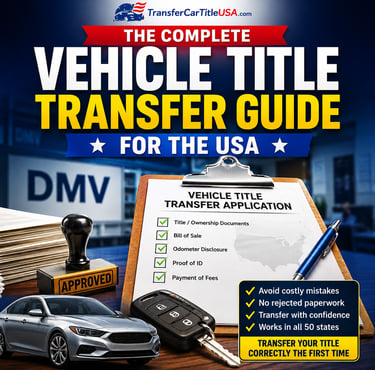
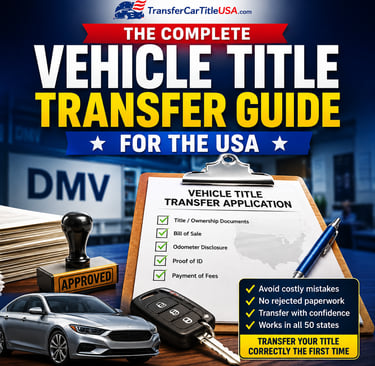
Gather Required Documents: Executors need to collect all relevant documents including the car title, death certificate, and if applicable, the will or trust documentation. These documents provide proof of ownership and the executor’s right to act.
Contact the DMV: It is advisable to reach out to your local Department of Motor Vehicles (DMV) or similar entity. They can provide specific forms and guide the executor through the process tailored to your state’s regulations.
Complete the Title Transfer Form: Filling out the title transfer form is crucial. Ensure that every detail is accurate to avoid delays. This may include information about the deceased and the executor.
Submit Required Fees: Depending on state law, there may be fees associated with transferring the vehicle title. Be prepared to provide payment at the time of submission.
Finalize the Transfer: Once all documents are submitted, the state agency will process the request and issue a new title in the name of the beneficiary or the executor, depending on the instructions outlined in the will.
Potential Challenges
Executors may face challenges such as disputes among heirs or confusion over ownership documents. It is important to handle these issues delicately. Seeking legal advice can provide necessary support should disputes arise, ensuring that the process remains compliant with state laws.
Conclusion
The transfer of a car title after death is an integral part of the executor's duties. By understanding the legal framework and following the outlined steps, executors can effectively manage this process. Taking proactive measures and consulting with professionals when necessary can ease the burden during an emotionally trying time.
👉 If you want to transfer your car title the right way, the first time, the full eBook gives you everything you need—without confusion, delays, or costly mistakes.
Help
Quick tips to avoid DMV delays
Contact
infoebookusa@aol.com
© 2026. All rights reserved.