
A Comprehensive Guide to Transferring a Car Title in California
Learn how to transfer a car title in California with this comprehensive DMV guide. Discover required forms, title fees, taxes, smog check rules, lien releases, deadlines, and common mistakes that can delay approval.
Dr. Elena Vance - Head of Research & State Regulations
4/16/20262 min read
Understanding the Importance of Car Title Transfer
Transferring a car title is an essential procedure when a vehicle's ownership changes. In California, the process is governed by strict regulations enforced by the Department of Motor Vehicles (DMV). Completing the title transfer correctly ensures that the buyer receives legitimate ownership while relieving the seller of future liabilities related to the vehicle.
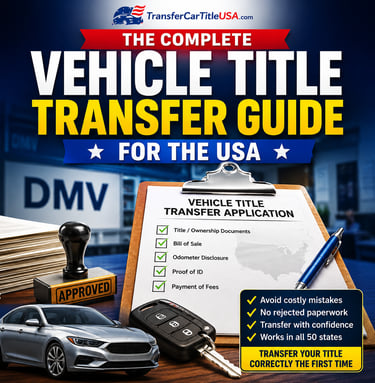
👉 If you want to transfer your car title the right way, the first time, the full eBook gives you everything you need—without confusion, delays, or costly mistakes.
https://transfercartitleusa.com/the-complete-guide
Steps to Transfer a Car Title in California
To initiate a car title transfer, several steps must be followed meticulously:
Complete the Title Transfer Application: The first step is to fill out the title transfer application (Form REG 343). This form collects information about the buyer, seller, and vehicle. Ensure all entries are accurate to avoid delays.
Obtain the Certificate of Title: The seller must provide the original title document. If the title is lost, the seller can apply for a duplicate title by completing Form REG 227.
Ensure Smog Certification: In California, most vehicles require a smog certification prior to the transfer. The seller should provide this document if applicable, as it demonstrates the vehicle meets the necessary emission standards.
Pay Transfer Fees: Current fees associated with title transfers in California can be verified on the DMV website. Ensure these are settled to complete the process.
Submit the Documents: All signed documents should be submitted to a local DMV office. Both buyer and seller may also opt to handle this through mail. Keep copies of all forms for personal records.
Receive the New Title: After processing, the DMV will issue a new title reflecting the buyer as the new owner. This document is crucial for vehicle registration and can affect insurance matters.
Common Mistakes to Avoid
While transferring a car title seems straightforward, several pitfalls can be encountered:
Incomplete Forms: Double-check to ensure all necessary fields are filled out on the application. Missing information can lead to significant delays.
Incorrect Fees: Failure to pay the correct transfer fees can result in rejection of the title transfer.
Ignoring Timelines: California mandates that the title must be transferred within ten days of the sale. Delays can lead to penalties.
In conclusion, transferring a car title in California involves careful planning and adherence to DMV guidelines. By following these outlined steps and avoiding common pitfalls, both buyer and seller can streamline the process, ensuring a smooth and effective transition of ownership.
👉 If you want to transfer your car title the right way, the first time, the full eBook gives you everything you need—without confusion, delays, or costly mistakes.
Help
Quick tips to avoid DMV delays
Contact
infoebookusa@aol.com
© 2026. All rights reserved.