A Step-by-Step Guide to Transferring a Car Title in New York
Learn how to transfer a car title in New York with this step-by-step DMV guide. Discover required forms, title fees, taxes, lien release rules, registration requirements, deadlines, and common mistakes to avoid. UPDATE 08/26/2026
Dr. James R. Sterling - Founder & Lead Documentation Specialist
4/21/20268 min read
Introduction to Car Title Transfers in New York
Transferring a car title in New York is a crucial step when buying or selling a vehicle. The title signifies ownership and must be updated to reflect the new owner's information. This process is governed by the Department of Motor Vehicles (DMV), and understanding the necessary steps can simplify the process. This guide will provide you with comprehensive instructions on how to transfer a car title in New York.
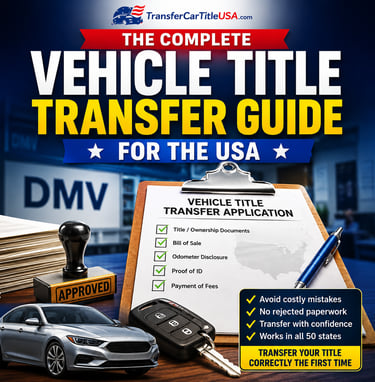
👉 If you want to transfer your car title the right way, the first time, the full eBook gives you everything you need—without confusion, delays, or costly mistakes.
https://transfercartitleusa.com/the-complete-guide
Necessary Documents for Title Transfer in New York: The Ultimate NYS DMV Guide
Transferring a vehicle title in the State of New York can feel like a daunting task. The New York State Department of Motor Vehicles (NYS DMV) is notorious for its strict paperwork requirements, specific local tax regulations, and zero-tolerance policy for incomplete forms. Whether you are buying a used car from a private seller in Long Island, selling your vehicle to a resident in Buffalo, or inheriting an automobile from a family member, having the exact set of legal documents is the only way to avoid frustrating delays and multiple trips to the DMV office.
This comprehensive guide serves as your definitive checklist and operational blueprint. By understanding exactly which forms you need, how to calculate your New York state and local sales taxes, and how to successfully navigate specialized transfer scenarios, you can fast-track your title processing and secure legal vehicle ownership with absolute confidence.
1. Why a Proper New York Title Transfer Matters
In New York, a Certificate of Title is the primary legal document that proves vehicle ownership. When ownership changes, New York law requires the transfer to be recorded with the NYS DMV promptly.
Legal Protections for the Seller
Until the NYS DMV officially updates its registry database, the person listed on the existing title remains legally and financially responsible for the vehicle. If the buyer drives away and gets into an accident, runs through a toll booth on the George Washington Bridge, or accumulates parking fines in Manhattan, the tickets and liabilities will automatically default to the seller. Completing the title transfer correctly isolates the seller from these severe financial risks.
Financial Security for the Buyer
For the buyer, a clean title transfer guarantees that you are purchasing a vehicle free and clear of unpaid debt. If a vehicle has a financial lien against it in New York, you cannot legally register it or obtain license plates under your name. Furthermore, driving an unregistered vehicle in New York can result in steep traffic fines, points on your license, and immediate vehicle impoundment by law enforcement.
2. The Core Document Checklist for a Standard NYS Title Transfer
If you are involved in a standard private vehicle sale between two New York residents, both parties must collaborate to build a complete application package. Arriving at a NYS DMV field office or mailing a packet without even one of these core documents will result in an immediate rejection.
NYS DMV Form / DocumentWho Must Complete It?Detailed PurposeOriginal NYS Certificate of TitleSeller & BuyerMust be the physical original, signed on the back by both parties. No photocopies.Form MV-82 (Vehicle Registration/Title Application)The BuyerThe primary state document used to request a new title and license plates.Form DTF-802 (Statement of Transaction - Sales Tax)Seller & BuyerUsed by New York State to calculate and collect local and state sales tax.Form MV-912 (Bill of Sale)Seller & BuyerExplicitly documents the agreed-upon purchase price, transaction date, and VIN.Proof of Identity and NYS ResidencyThe BuyerRequires passing the DMV’s "6-Point ID" system (e.g., NYS Driver's License).NYS Auto Insurance Card (FS-20)The BuyerMust be an official New York card showing an active policy on the specific VIN.
3. Step-by-Step Breakdown of Essential New York Forms
The Original Certificate of Title (The Backbone of the Sale)
The actual paper title document must be pristine. On the back of the New York title, you will find the "Transfer by Owner" section.
The Seller's Duties: The seller must sign and print their exact name precisely as it appears on the front of the title. They must also fill in the buyer’s name, address, the odometer reading (mileage) at the exact moment of sale, and the date of the transaction.
The Buyer's Duties: The buyer must review the information for accuracy and sign the buyer's section.
Crucial NYS Rule: If there is a lienholder listed on the front of the title, the seller must provide an official Form MV-901 (Notice of Recorded Lien) or a formal letter on bank letterhead confirming the loan is paid in full.
Form MV-82: Vehicle Registration and Title Application
This multi-page document is completed solely by the buyer. It asks for your personal information, detailed vehicle specifications (year, make, model, body type, cylinders, and fuel type), and details about any auto insurance policy you have established for the car. If you only want a title document and do not plan to drive the vehicle immediately on public roads, you can check the "Title Only" box on this form.
Form DTF-802: Statement of Transaction for Sales Tax
New York State is highly aggressive when it comes to collecting sales tax on vehicle transactions. Form DTF-802 must be filled out meticulously.
Section 5 (Seller's Section): If the vehicle is being sold below the fair market value, or if it is being given as a gift, the seller must complete Section 5 and sign it. If they refuse to sign it, the DMV clerk will reject the declared price and tax the buyer based on the fair market value of the car.
Section 6 (Buyer's Section): The buyer signs here to certify the final purchase price they paid.
Form MV-912: The Bill of Sale
While New York allows handwritten bills of sale, it is highly recommended to use the official DMV Form MV-912. It must clearly outline the year, make, model, and the 17-digit Vehicle Identification Number (VIN). Both parties must sign this document. It serves as a binding receipt for the financial exchange.
4. Understanding New York's Strict "6-Point ID" and Insurance Rules
You cannot walk into a New York DMV, hand over a title, and expect to walk out with registration plates unless you can definitively prove who you are under the state’s specialized identity system.
The 6-Point Identity System
New York requires the buyer to present a combination of documents that add up to at least 6 points. All documents must be original or certified copies.
NYS Photo Driver License/Learner Permit/Non-Driver ID: Worth a full 6 points on its own (covers all requirements if it is valid and matches your current address).
US Passport: Worth 4 points.
Utility Bill (with your name and NYS address): Worth 1 point.
Major Credit Card: Worth 1 point.
Social Security Card: Must be presented alongside other documents to verify your SSN, though it does not carry standalone numerical point value.
The FS-20 NYS Auto Insurance Card
New York State operates an electronic insurance tracking system that is incredibly strict. You cannot use an out-of-state insurance policy, nor can you use a temporary binder format that works in other states. You must obtain an official New York State Insurance Identification Card (Form FS-20) from an insurance company licensed by the New York State Department of Financial Services. The name on the FS-20 card must match the name on your Form MV-82 and your ID exactly.
5. Navigating Sales Tax, Fees, and the "Fair Market Value" Trap
When buying a car privately in New York, the buyer is responsible for paying state and local sales tax at the time of the title transfer. The tax rate is based on the buyer’s county of residence, not where the vehicle was purchased.
NYS Title Transfer Fee Structure
In addition to sales tax, you must prepare for standard fixed administrative fees:
Title Fee: A flat fee of $50.00 to issue a new certificate of title.
Registration Fees: Varies dynamically depending on the weight of the vehicle (typically ranging from $26.00 to $140.00 for a two-year registration cycle).
Plate Fee: A flat fee of $25.00 for a brand-new set of physical New York license plates.
Avoid the "Under-the-Table" Pricing Risk
Many buyers and sellers attempt to write an artificially low price (such as $100 for a vehicle worth $10,000) on the paperwork to minimize the buyer’s sales tax liability. Do not do this.
The NYS Department of Taxation and Finance cross-references every vehicle transaction against the National Automobile Dealers Association (NADA) appraisal guides. If your purchase price falls significantly below the standard presumptive value of the car, the DMV clerk will override your written price and calculate the sales tax based on the vehicle's fair market value. The only exception is if the vehicle has severe damage, in which case you must submit a professional repair estimate or have the seller complete Section 5 of Form DTF-802 explaining the low price.
6. Document Protocols for Specialized NYS Transfer Scenarios
Not every title transfer involves a direct cash sale between individuals. Special circumstances require completely separate legal paperwork paths.
1. Gifting a Vehicle to a Family Member
If you are gifting a car to a qualified relative (spouse, parent, child, stepchild, sibling), the recipient does not have to pay sales tax. However, the standard forms will not suffice.
Required Extra Form: You must submit Form DTF-802 and check the box indicating a gift transaction.
Family Limitation: Nephews, nieces, aunts, uncles, and cousins do not qualify for this tax exemption. Transactions between those relatives are taxed at standard local county rates.
2. Transferring a Title from a Deceased Owner
If a New York vehicle owner passes away, the vehicle cannot be legally driven or sold until the title is adjusted.
If Jointly Owned with a Spouse ("OR" status): The surviving spouse automatically owns the vehicle. To update the title, they must submit the original title, a certified copy of the death certificate, and Form MV-349.1 (Affidavit for Transfer of Motor Vehicle).
If Part of an Estate: If the vehicle belongs solely to the deceased person, the court-appointed Executor or Administrator must sign the back of the title on behalf of the estate. They must present the original title alongside official Letters Testamentary or Letters of Administration issued by a New York Surrogate's Court.
3. Transferring an Out-of-State Vehicle to New York
If you move to New York from another state (such as New Jersey or Connecticut), you must transfer your out-of-state title to New York within 30 days of establishing residency.
Required Documentation: You must bring your original out-of-state title, your current out-of-state registration, Form MV-82, an FS-20 insurance card, and Form DTF-802.
Tax Exemption: If you have owned the vehicle for longer than 90 days out-of-state before moving to New York, you are generally exempt from paying sales tax to NYS, provided you can prove you paid sales tax to your previous home state.
7. Operational Tactics to Avoid NYS DMV Delays
The New York DMV offers two primary pathways to file your completed title paperwork package: scheduling an in-person appointment or utilizing their secure mail-in drop boxes.
In-Person Field Office Appointments
If you need your license plates immediately, an in-person appointment is mandatory.
Pro Tip: Do not walk into a NYS DMV office without an online reservation. Visit the official NYS DMV website to schedule a specific date and time slot.
Timing Strategy: Target appointments scheduled for Tuesday, Wednesday, or Thursday mornings. Avoid the first and last days of the month, as well as days immediately following a state federal holiday, when volume peaks significantly.
Secure Drop Box and Mail-In Method
If you do not need new license plates immediately (for example, if you are only transferring a title without registering the vehicle for road use), you can mail your entire document package directly to your local county DMV office or drop it off in a designated secure physical drop box located at the office entrance.
Filing Tip: If using the mail or drop box method, you must include a clear photocopy of your 6-Point ID documents and a check or money order made out to the "Commissioner of Motor Vehicles" to cover the exact fees. Always use a traceable shipping method (like USPS Certified Mail) to ensure your irreplaceable original title document is tracked safely.
Conclusion
Successfully executing a vehicle title transfer in New York comes down to an uncompromising attention to detail. By verifying that the original title is free of unreleased liens, filling out Forms MV-82 and DTF-802 without structural errors, and securing a valid NYS FS-20 insurance card, you turn a potentially chaotic bureaucracy into a predictable, smooth transaction. Gather your documents ahead of time, double-check your signatures, and secure your asset quickly and legally.
👉 If you want to transfer your car title the right way, the first time, the full eBook gives you everything you need—without confusion, delays, or costly mistakes.
Help
Quick tips to avoid DMV delays
Contact
infoebookusa@aol.com
© 2026. All rights reserved.