
Transferring a Car Title Without Insurance: What You Need to Know
Can you transfer a car title without insurance? Learn the rules, risks, and state-specific requirements that affect title transfers, vehicle registration, and DMV approval so you can avoid delays, penalties, or rejected paperwork.
Dr. Marcus Thorne - Operations & Compliance Manager
4/30/20262 min read
Understanding Title Transfer Basics
Transferring a car title can seem like a daunting task, particularly when considering the various requirements and regulations involved. One common question that arises is whether it is possible to transfer a car title without having insurance on the vehicle. In this article, we will explore the necessary steps to achieve a title transfer and discuss the implications of not having insurance during this process.
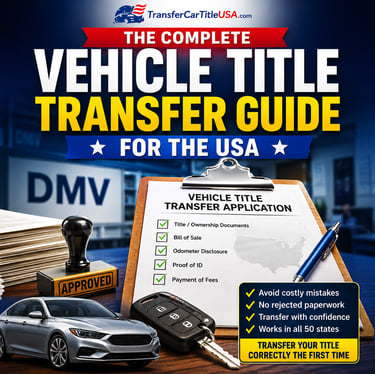
👉 If you want to transfer your car title the right way, the first time, the full eBook gives you everything you need—without confusion, delays, or costly mistakes.
https://transfercartitleusa.com/the-complete-guide
The Legal Requirements for Title Transfer
When transferring a car title, certain requirements must be met by both the buyer and the seller. Typically, the seller must provide the buyer with the original title, which should be signed over to the new owner. Additionally, a bill of sale may be required, depending on the state in which the transaction occurs.
Importantly, while most states mandate that vehicles be insured before they are driven on public roads, they do not necessarily impose insurance requirements at the time of title transfer. Therefore, in many cases, it is indeed possible to transfer a car title without insurance. However, specific state laws may vary, so it is essential to check local regulations.
The Risks of Transferring a Car Title Without Insurance
While it may be legally permissible to transfer a title without insurance, it is worth considering the potential risks involved. For example, if the new owner intends to drive the car immediately following the transfer, they can be subject to penalties if they lack the necessary insurance coverage. Furthermore, if the vehicle is involved in an accident after the transfer but before the new owner secures insurance, the previous owner may face liability issues.
Additionally, if the buyer plans to register the vehicle in their name, most states will require proof of insurance as part of the registration process. Therefore, while a title transfer can occur without insurance, the practical implications may necessitate securing coverage as soon as possible to avoid any legal complications.
Best Practices for Title Transfer and Insurance
To ensure a smooth title transfer procedure, it is advisable for buyers to acquire insurance coverage before finalizing the transfer. This proactive approach will ensure that the new owner complies with local laws and is protected in the event of unforeseen incidents post-transfer.
Moreover, both parties should conduct the title transfer in a written format and keep copies of all documentation, which can serve as a safeguard in case disputes arise in the future.
In summary, while it is often possible to transfer a car title without insurance, taking steps to secure insurance beforehand is prudent. Understanding the requirements and risks involved will help facilitate a successful title transfer process, ensuring that both buyer and seller are protected legally and financially.
👉 If you want to transfer your car title the right way, the first time, the full eBook gives you everything you need—without confusion, delays, or costly mistakes.
Help
Quick tips to avoid DMV delays
Contact
infoebookusa@aol.com
© 2026. All rights reserved.