
Why Most DMV Problems Are Self-Inflicted (And How to Avoid the Trap Completely)
Most DMV problems come from avoidable mistakes like missing documents, incorrect forms, and poor preparation. Learn how to prevent delays, rejections, and wasted time with practical strategies that make every DMV visit smoother and stress-free.
Dr. Marcus Thorne - Operations & Compliance Manager
11/12/20262 min read
Why Most DMV Problems Are Self-Inflicted (And How to Avoid the Trap Completely)
After seeing hundreds of title transfer failures, one pattern appears over and over—uncomfortable but true:
Most DMV problems are not caused by the DMV.
They’re caused by applicants creating risk without realizing it.
This article explains how people accidentally sabotage perfectly fixable cases, why “doing more” usually makes things worse, and how to stay out of the self-inflicted trap entirely.
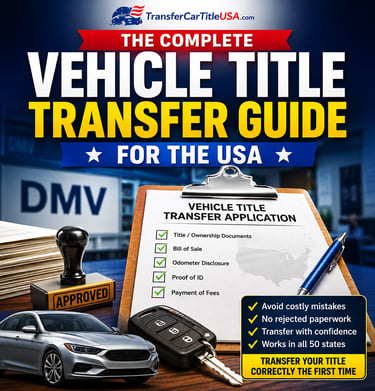
👉 If you want to transfer your car title the right way, the first time, the full eBook gives you everything you need—without confusion, delays, or costly mistakes.
https://transfercartitleusa.com/the-complete-guide
The DMV Rarely Creates Chaos First
Contrary to popular belief, the DMV usually:
Applies rules consistently
Follows predictable workflows
Flags the same risks every time
Chaos usually begins after the first human decision by the applicant.
The Core Self-Inflicted Error
The single most common mistake is this:
Taking action before the correct prerequisite is locked in.
Examples:
Signing before liens are cleared
Submitting before authority is proven
Mailing before verifying VIN rules
Escalating before the file is complete
Each premature move compounds risk.
The “Let Me Just Try” Syndrome
This mindset causes more damage than almost anything else.
People think:
“It might work”
“Worst case they reject it”
“I’ll explain if needed”
But in DMV systems:
Every attempt creates a record
Every record can conflict
Every conflict slows future approvals
Trying is not free.
How Innocent Fixes Create Permanent Damage
Common “helpful” actions that backfire:
Re-signing titles
Re-dating documents
Correcting handwriting
Adding clarifying notes
Attaching explanations
What feels like fixing often creates alterations, and altered titles are radioactive.
Why Over-Preparation Is Dangerous
People assume:
“More documents = stronger case.”
In reality:
Extra documents raise questions
Questions trigger scrutiny
Scrutiny slows everything
Clerks expect specific documents, not thoroughness.
The Psychological Trap: Urgency
Urgency is the silent destroyer.
Urgency causes:
Skipped verification
Combined steps
Emotional escalation
Mail-in gambles
Late-day submissions
Urgency does not speed the DMV.
It increases error probability.
The Second Trap: Fairness Thinking
Applicants think:
“This should be allowed”
“That makes no sense”
“Anyone can see what I mean”
The DMV does not operate on fairness.
It operates on:
What can be defended without interpretation
Fair logic that isn’t documented is invisible.
How Self-Inflicted Problems Multiply
One small mistake often triggers:
Rejection
Overcorrection
Conflicting records
Escalation too early
Restart forced
At that point, the original issue is no longer the problem.
How to Spot a Self-Inflicted Problem Early
Ask yourself:
Did I submit before everything was verified?
Did I change something the DMV didn’t ask me to?
Did I act because I was stressed or rushed?
Did I add documents “just in case”?
If yes, stop immediately.
The Anti-Sabotage Rule (Follow This)
Never act unless the action makes the next step easier and safer.
If an action:
Creates new interpretation
Alters original records
Introduces timing risk
…it is the wrong action.
What Disciplined Applicants Do Differently
They:
Pause instead of panic
Separate steps religiously
Lock authority first
Resolve liens completely
Submit once, cleanly
Accept waiting when required
They feel slower—but finish faster.
Why This Matters More Than Expertise
You can know every rule and still fail if you:
Rush
Tinker
Explain
Try shortcuts
Discipline beats knowledge at the DMV.
The Moment You Regain Control
The moment you stop reacting and start sequencing, things stabilize.
No new damage is created.
The file becomes reviewable again.
Supervisors can actually help.
Control returns.
The One Sentence That Prevents Self-Inflicted Failures
Before any action, say this out loud:
“Is this required—or am I acting to feel progress?”
Only required actions belong in DMV processes.
Final Takeaway
The DMV is strict—but predictable.
Most disasters happen not because the system is cruel, but because people introduce risk unintentionally.
When you slow down, stop trying, and only act when prerequisites are complete, the DMV stops being a fight—and becomes a sequence.
👉 At the DMV, restraint is a skill—and it pays.https://transfercartitleusa.com/the-complete-guide
Help
Quick tips to avoid DMV delays
Contact
infoebookusa@aol.com
© 2026. All rights reserved.